Written by Francesca O’Callaghan
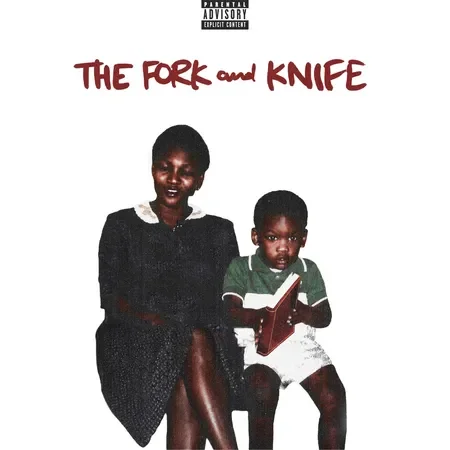
Skepta - The Fork and Knife
Skepta's latest studio album, The Fork and Knife, drops its beat seven years after his previous LP, Ignorance Is Bliss - which debuted number two on UK album charts - and two years after its initial announcement for release in 2024.
Spanning 15 tracks, the project finds its harmony through a wall of sound across rap, grime and electronic music, including Asake, Aya Nakamura, Central Cee, Chase & Status, Jorja Smith, Fred again.. and of course it wouldn’t be a Skepta album without a pinch of JME.
Through this wide range of artists, Skepta aimed to bring different musical worlds together while maintaining a distinctly British identity.
From Tottenham to the top
Born Joseph Junior Adenuga to Nigerian immigrant parents in 1982, Skepta grew up on Tottenham's Meridian Estate - situated between North Middlesex Hospital and White Hart Lane - where his introduction to music began behind the decks rather than a mic.
As a young DJ for North London's Meridian Crew, he developed his sound through radio stations, mixing instrumentals and absorbing the aggressive energy of the underground scene.
Alongside his brother JME, he later established Boy Better Know (BBK), an independent collective and record label that became one of the most influential forces in British grime.
The rise of grime
When grime first emerged from London's council estates in the early 2000s, its sound was unlike anything else. Driven by fast-paced 140 BPM instrumentals, abrasive electronic production offered a voice to a generation that had largely been overlooked by mainstream music.
Unlike much of American hip-hop, which traditionally leaned towards slower rhythms and more melodic production, grime was raw, unpredictable and confrontational.
Skepta became one of its most recognisable voices.
His sharp wordplay and ability to place rhymes in unexpected pockets distinguished him from the more predictable structures of American rap, namely the recurring chorus to maximise catchiness and lyric flow.
Inspired by pioneers such as Wiley and Dizzee Rascal, he helped transform what was once an underground movement into a global cultural force.
His 2014 release, ‘That's Not Me’ (which has accumulated over 169.3 million streams on Spotify), reignited curiosity in the genre's original sound, while ‘Shutdown’ propelled grime further into the mainstream.
His 2016 album Konnichiwa subsequently earned him the Mercury Prize, cementing his position as one of the most influential figures in British rap.
Speaking at the post-show winners' press conference, he stated: “It's not a revolution for grime, it's a revolution for freedom. I just wanted to know what happens when you do it yourself.“
The story behind The Fork and Knife
On The Fork and Knife, however, the familiar bravado takes a backseat.
At 44, Skepta appears less concerned with maintaining the larger-than-life persona that defined much of his earlier work, instead offering listeners a more candid perspective on fatherhood, family, ambition and the experiences that shaped him.
The album's title itself draws from the advice of his Igbo Nigerian mother, who would remind him of the importance of hard work so that one day he could "eat with a fork and knife".
It is an immigrant story, one rooted in perseverance, sacrifice and the pursuit of something better for the next generation, helping mirror the culture makeup and socio-political resistance of the genre itself.
This is particularly evident on the album’s opener, ‘Secrets of Patriarchy’, where Skepta walks listeners through an ordinary day in his life, from dropping his children off at school, to heading to the gym because his "girl like guns", before taking MAINS designer Mikey Pearce out for dinner.
Visually, The Fork and Knife draws on 1980s Nigerian-British imagery, football culture and documentary realism, connecting the history of the Windrush generation with the energy and reality of modern London.
Skepta has spent years telling the world who he is. This time, he is offering a little more insight into where he came from and more importantly, why it matters.