From 1501 to Hot Girl Productions: How Megan Thee Stallion built her next chapter around ownership
Written by Matilia Trammell
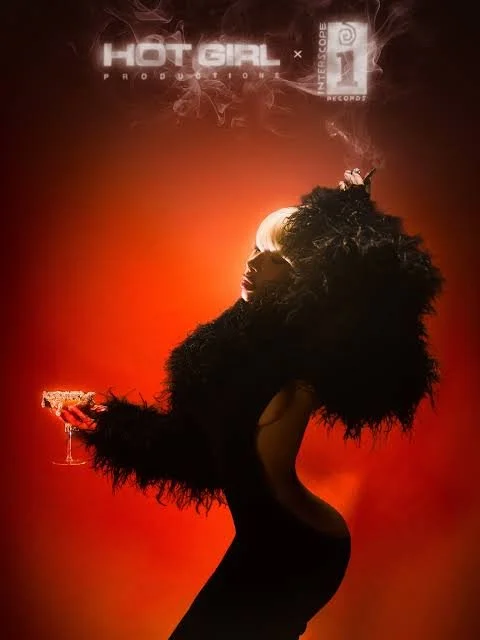
Credit: Megan Thee Stallion via Facebook
The most important part of Megan Thee Stallion’s new deal with Interscope Records is probably the part that didn’t change.
When the partnership was announced in August, Interscope became the company handling global distribution and strategic support for her upcoming releases. Hot Girl Productions, however, remained Megan’s home base. That meant that her music would continue to be released through her own company, and she’d retain complete ownership of her masters and publishing.
What makes the deal significant isn’t simply that Megan has another major music company behind her as she prepares for a new era; It’s that she’s reached the point where those companies can change without the ownership structure surrounding her career changing with them. After spending years fighting to free herself from a contract that became increasingly restrictive, she’s now entering Act III from almost the opposite position: major-label resources are available to her, but ownership of the work stays in her hands.
A few years ago, that kind of arrangement would have been difficult to separate from everything Megan had
For more than three years, the Houston rapper was locked in an increasingly messy legal battle with her former label, 1501 Certified Entertainment. Megan signed with the label in 2018, then joined Roc Nation for management the following year. She later said that working with new lawyers made her aware of terms in her original contract that she hadn’t fully understood when she signed it.
So, in 2020, after attempting to renegotiate, Megan sued 1501 and alleged that the company was preventing her from releasing new music. She also claimed that under the deal, 1501 received 60% of her recording income, along with percentages of touring and merchandise revenue.
The fight was on—and it didn’t end quickly. Instead, it kept playing out in the background as her career visibly grew at the forefront.
By 2022, one of the disputes had become surprisingly literal: what, exactly, counted as an album? Megan argued that her 2021 project Something for Thee Hotties satisfied her contractual album requirement with 1501, while the label disagreed, arguing that the project didn’t contain enough new material. Because the number of qualifying albums affected how quickly she could complete her recording obligations, the disagreement became another part of a much larger fight over when Megan would finally be free to leave.
She later sought more than $1 million in damages over what she alleged were unpaid royalties and excessive charges. 1501 disputed the claims, but eventually, in October 2023, the two sides reached a confidential settlement and agreed to part ways.
For the first time in years, there was no longer a question hanging over when Megan would fulfil someone else’s contract. There was, however, another question: what was she going to do without one?
Megan’s answer seemed clear. Instead of immediately replacing 1501 with another traditional record deal, she began funding her own releases and putting them out through Hot Girl Productions. ‘Cobra’, released shortly after the settlement, became her first independent single under that structure.
But it was one thing to finally have control. It was another thing to prove that the career built around Megan Thee Stallion could continue without simply plugging her into another version of the system she had just spent years trying to escape.
Then came ‘Hiss’.
Released in January 2024, the song debuted at number one on the Billboard Hot 100 and became Megan’s first solo chart-topper. Suddenly, this new independent chapter didn’t look like a holding pattern between label contracts, considering one of the biggest records of her career had arrived while she was operating through her own company.
Building on that momentum, a week after ‘Hiss’ reached number one, Megan announced a new agreement with Warner Music Group.
Warner gave her access to distribution, radio promotion, marketing and international resources—the kind of machinery a global artist can still benefit from even when capable of financing their own records. But it didn’t get ownership of those records. Megan retained her masters, publishing and creative control while continuing to release music through Hot Girl Productions.
She had found a way to use major-label infrastructure without rebuilding the same kind of relationship she’d fought to leave, and that structure carried her through the release of Megan in June 2024, which debuted at number three on the Billboard 200. More importantly for the larger story, it showed that independence didn’t have to mean doing every part of the job alone. Megan could still use the resources of a major company without handing over ownership of the work itself.
Now, there’s been an even more recent development: Two and a half years after announcing the Warner agreement, Megan moved the distribution of her music to Interscope Records. Different company, remarkably familiar terms. Interscope would provide global distribution and strategic support for her upcoming releases, while Megan would retain complete ownership of her masters and publishing, with the music still coming through Hot Girl Productions.
With this newfound change, it’s even more difficult to see this structure as a temporary experiment; it’s clear that Megan’s distribution partners can change, but the ownership she has over her music cannot.
That distinction says much more about Megan’s post-1501 career than simply calling her an independent artist ever could. Independence, in her case, hasn’t meant isolating herself from the major-label system.
She still works with enormous music companies, uses their resources and benefits from the reach that comes with them, but she’s changed where they sit in the hierarchy surrounding her career.
Hot Girl Productions has the artist and the music. The major company provides the machinery needed to push that music further.
It’s an enviable arrangement, and obviously not one available to every musician who wants more control. Megan entered this chapter with years of hit records, Grammy wins, a massive fanbase and enough commercial power to negotiate from a very different position than an emerging artist signing their first contract.
Still, her career shows what can become possible once an artist has enough leverage to demand a different kind of relationship with the companies around them.
The early Megan Thee Stallion signed an agreement before she had the power, experience or team she would later have behind her. The Megan negotiating now walks into those rooms as an established artist with proof that her business can function without giving another company ownership of the music. And her next musical chapter is already starting to arrive under that setup.
On 29 September, Megan revived her Tina Snow alter ego for ‘Tina Tuesday Freestyle’, the first taste of the Act III era after a relatively quiet year musically. One Tuesday later, she did it again with ‘Is You Cool?’.
The way her level of control over her career and relationship with ownership and creative control has changed in the years following the release of her initial Tina Snow projects makes the return of Tina Snow feel all the more pleasing and incredibly fitting.
The persona stretches back to Megan’s earlier years, long before Hot Girl Productions was operating at its current scale and before ownership became such an obvious part of the conversation surrounding her career. So, the rapper returning to an old part of herself on her own terms feels even better to witness.
Megan spent the beginning of her career fighting over how much control somebody else could have over the work attached to her—or her persona’s—name. What she built afterwards suggests she took that experience seriously. She didn’t leave 1501 simply to find another company to hand the same power to; She built a career where the companies around Megan Thee Stallion can change without ownership of Megan Thee Stallion’s music changing with them.
That’s what makes the upcoming Act III era significant before the album’s even arrived. Megan is entering it with something she spent years fighting to obtain and then several more proving she could maintain: control over the business surrounding her music. The songs, visuals, rollout and return of Tina Snow will all arrive through a career structure that she now has far more power to shape for herself.
This new era isn’t just about Megan releasing a new album. It represents what happens after the fight is over, when ownership stops being something an artist is trying to win back and becomes the foundation they get to build from.