Is live music heading towards a screen-free future?
Written by Molly McGee
Live music is becoming an increasingly phone-free experience as artists implement restrictions on devices during shows.
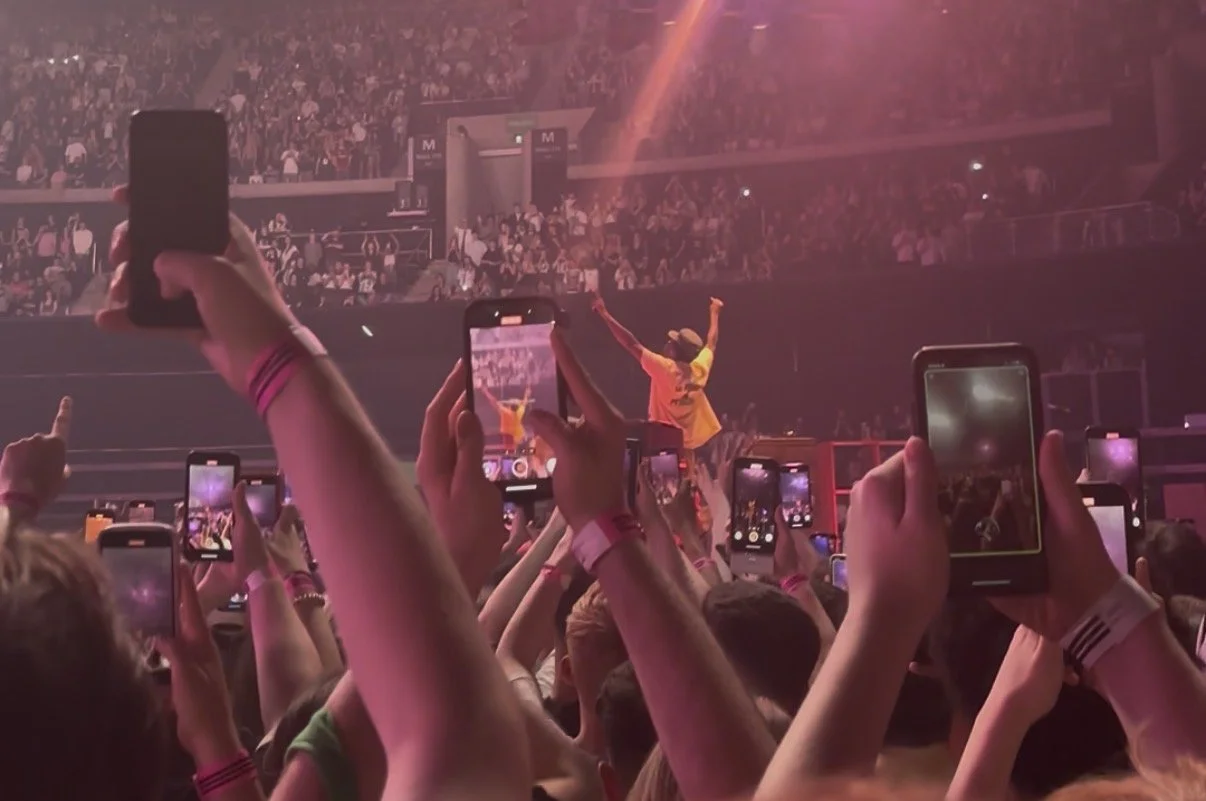
Concerts have always been an opportunity for fans to collectively experience their favourite music beyond the limitations of physical media and online streaming.
Over the past decade, amid a digital age where social media is expanding exponentially, there has been an ongoing debate surrounding whether capturing content is detracting from the point of live music: to live in the moment.
The use of phones at live music events brings negative implications not just for the person filming, but to other audience members as well as the artists themselves.
By prioritising photos and videos, fans cannot fully immerse themselves in the present, redirecting their energy away from dancing, singing and displaying their dedication to the artist.
Devices also obstruct the audience’s view of the stage, leaving fans frustrated at having to watch the concert through a screen.
However, it is most disheartening for musicians who, amongst a sea of phones, feel as though their work is not being appreciated and their lyrics are not being paid attention.
For this reason, artists have started implementing restrictions on devices to foster a sense of intimacy during their performances. Removing phones allows artists to fully see and connect with their audience, reinforcing the purpose of their music.
Bob Dylan, Paul McCartney and Guns n’ Roses are some of the biggest names supporting this initiative, providing fans with lockable magnetic pouches to prevent phone usage during the show.
More recently, artists including Fred again.., Harry Styles and Phoebe Bridgers have joined the lineup, demonstrating how the idea is gaining traction across multiple music genres. Styles even provided each fan with a disposable camera, ensuring they could capture memories of the night whilst maintaining a compelling engagement with his performance.
Many music lovers are embracing this idea, preserving the privilege and exclusivity of attending a concert. 79% of young adults say spontaneity is important at events, something that 49% of Gen Z and Millennials have agreed with.
Rather than turning the concert into a digital archive that exists for online attention, fans want concerts to feel less curated with a more authentic atmosphere. Data from Eventbrite reveals how phone-free experiences increased 567% globally between 2024-2025, signalling an acceptance of these behaviours in the mainstream.
However, this attitude isn’t something being adopted by the whole industry. 2024 saw Damon Albarn, lead singer of Blur, criticising the banning of phones at concerts.
“People won’t want to be on their phone if you’re engaging with them correctly,” stated Albarn in an interview with the BBC, arguing that musicians should be keeping their audiences engaged rather than restricted.
At a time when concert ticket prices are at their highest, some fans feel like they deserve visual reminders to justify their financial investment. This argument is especially applicable to solo concert goers who cannot share the experience with anyone else.
Banning phones doesn’t just restrict the people at the show but equally prevents other fans from experiencing what it would be like to attend.
Although musicians see removing phones as counteracting unauthorised livestreams and illegal audio recording, barriers such as distance and money still prevent certain fans from attending, leaving them feeling that no phone policies are unfair.
Superficially, filming concerts disengages audience members as they are not participating with the show. However, an argument prevails that participation extends beyond the end of the concert due to the endless stream of content dissipated on social media.
Therefore, phones may not inherently be an issue but the fans becoming less immersed in live music is the problem. While they are physically present, and their videos allow engagement with likeminded fans online, their attention is redirected in the moment, concerned with the angle or lighting of their footage.
For this reason, some artists have not introduced full bans but encouraged fans to only film certain songs, allowing them to maintain exclusivity and creative freedom throughout the show.
This compromise ensures both fans and musicians are kept happy and is becoming an increasingly popular pathway into making live music more captivating again.