The environmental impact of our listening habits
Written by Kathryn Nutt
These past few years have seen CDs and records make a huge comeback, with more people than ever making a return to owning their own music again with physical media. The only issue with this is that the mass-production of physical media often means an abundance of useless plastic, pollution and a large amount of unbought waste.
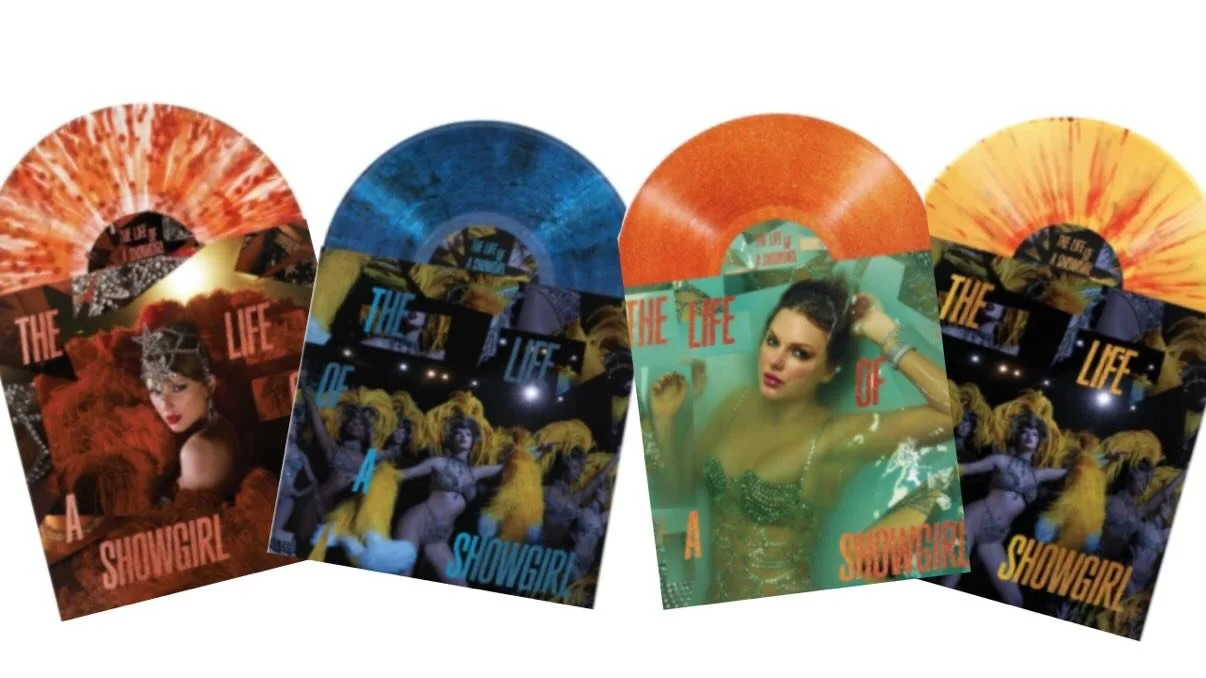
Taylor Swift albums varients
A key player in this issue are the mass-produced, different colour versions of albums that seemingly hold no other purpose but to be a different colour or image. While deluxe versions are normal and typically provide more content in return for buying another album, the only difference in these other versions is usually the colour and cover picture. Which begs the questions, is there any point to them? Are they doing more harm than good? And what is the impact on our environment of this overproduction?
Pop artists like Taylor Swift have come under criticism recently for this. Swift herself has been producing multiple colour versions of albums since 1989 (Taylor’s Version) in October 2023 and has since done it for all her album releases.
When I first bought a second colour variant of 1989 (Taylor’s Version), I was confused when there wasn’t extra content inside, like an added song or special secret. I wondered what the point of this was, as someone who isn’t a collector, and where these alternate versions actually end up.
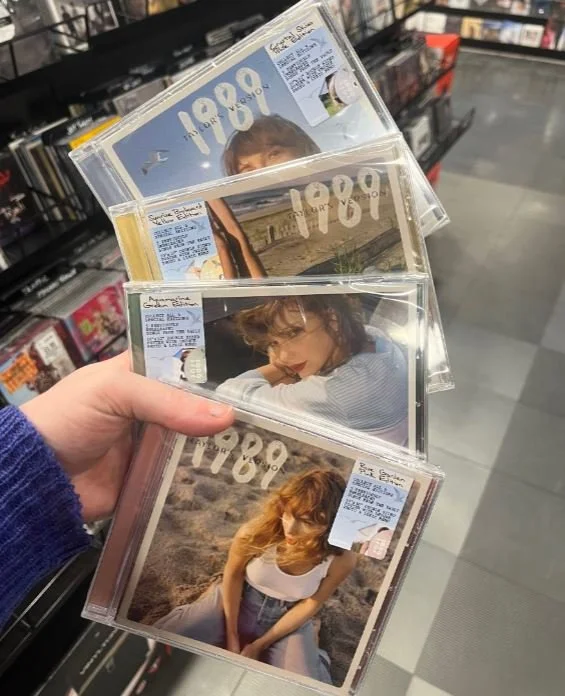
Credit: Kathryn Nutt
Consumerism is the act of overbuying unnecessary items or single-use products, and is most common within commercial industries, such as fashion and entertainment. This practice has been criticised for its impact on the planet, poverty rates and cases of modern slavery in the production line. And the music industry has avoided criticism in relation to this for a while now, after CDs and vinyls were filtered out in the late 2000s and online streaming took over. But with the re-emergence of physical media as people look to own their music for themselves, the industry has gone into hyperdrive with overproduction, creating too much too fast.
Records are now made with non-recycleable PVC instead of shellac, which used to be farmed from the female Kerria lacca bug to produce vinyl records, which had a lower environmental impact than the PVC plastic that is used now. The PVC records require oil, a main fossil fuel, to function, greatly increasing its carbon footprint and the effect it’s having on the planet. In 2024, musician Billie Eilish released her new album Hit Me Hard and Soft which she announced would be printed on recycled vinyl material and created using biofuels instead of fossil fuels.
CDs are made of layered polycarbonate and aluminium, and so cannot be recycled. However, they do use less materials and those used have less of an environmental impact than PVC does. The cases that CDs often come in are also polycarbonate, but are rarely recycled as they protect the discs. Now, some newer CDs have cardboard cases, and these usually come from smaller artists - however musicians like Florence and the Machine and Olivia Dean have used them for their most recent albums. This encourages a more mindful approach to music production, and is generally better.
When I started researching the impact of multiple colour albums, I questioned what the purpose of them is, and I have an answer - it is purely a collector’s item. There is nothing more to them, only there being a different picture inside each one, and for people who pride themselves on having complete collections, they serve a purpose for pleasure’s sake. And I’m sure this makes plenty of money for those at the top of the chain. But in the mindset of someone who buys a CD or record to actually listen to it, they’re insignificant and a waste of money. It’s a collector’s mindset behind the purchase of these multiple versions, but a capitalist’s mindset behind the creation of them.
This research has also led me to consider where else the music industry harms and overproduces, and if streaming music has an environmental impact similar to physical media.
Streaming music from your phone or laptop requires energy to charge and run devices and transmit that information from network to network, approximately 107 kilowatt hours of electricity every year, compared to the 34.7 kilowatts a year that a CD player uses. In 2023, Spotify recorded a total emission of 280,355 metric tons of greenhouse gases.
When I began looking into the lifecycle of physical media, I knew that I was going to come out with a message of ‘plastic and overconsumption is bad’, because there is no way to discuss the lifecycle without addressing the climate crisis and how we as consumers get pulled into that mindset.
The answer to the question about the pointless multiple variations of CDs and records is easy to answer, they’re only useful to collectors, and only add to the world’s overconsumption and fossil fuel problems. But using physical media in the long run is the more environmentally friendly one, as long as you know you want to keep it and continue to use it until it breaks. It feels like every action we take to enjoy ourselves and brighten up our lives will cost the planet something, and it’s nearly impossible to cut our emissions down, but what we can do is stop consuming so much. Stop buying for the sake of buying, and start calling on our favourite artists to make a more environmentally friendly change.