The return of B-sides in the streaming era
Written by Charlotte Hornbuckle
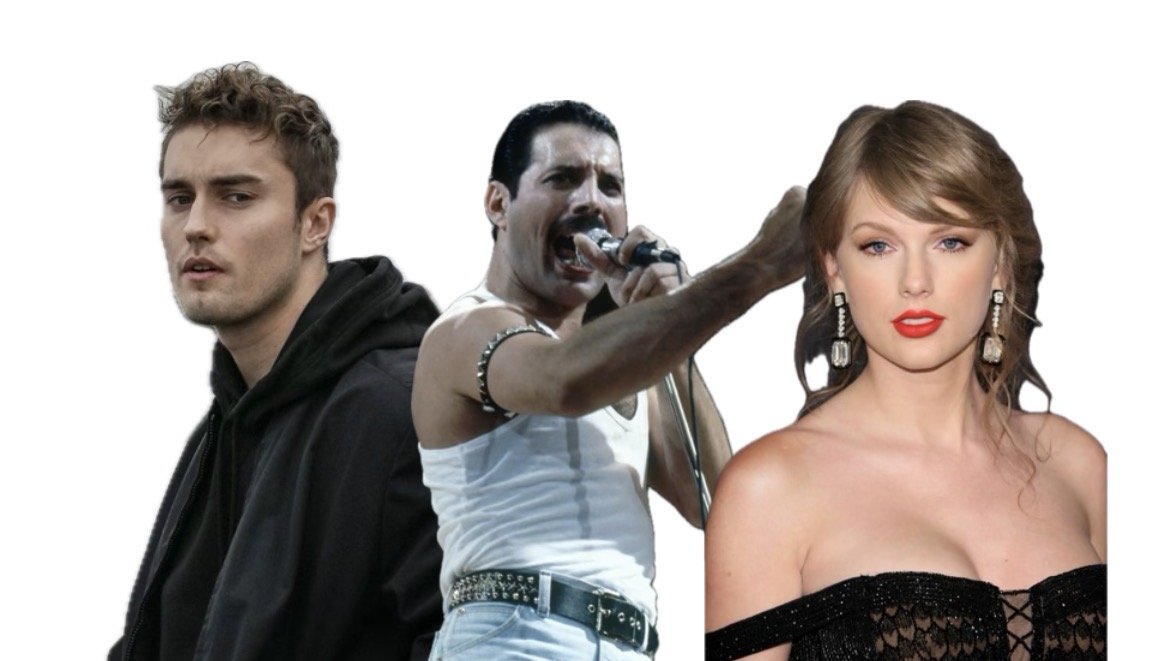
Left to right: Sam Fender, Oasis, Taylor Swift
If I asked you to name a song by a popular artist, the likelihood is that you’d probably name one of their most well-known singles. However, for every lead single, there are several other songs that don’t make the cut to be promoted.
Referred to as B-sides, these songs rely on fans listening to the whole record for them to be heard, rather than just radio plays. This is not necessarily the case now, as with social media and streaming services, it is much easier to access music and hear tracks that were previously ignored.
What is a B-Side?
Historically, a B-side is the song put on the flip side of a single vinyl, often to ‘complete’ the record as there was enough room for a typically shorter song. While many artists treated this track as a filler, there were some occasions where the B-side became equally if not more famous than the lead single.
A famous example of this is ‘We Will Rock You’ by Queen, which although was on their album News Of The World, originally started as the B-side to ‘We Are The Champions’ as Queen designed both songs to be played consecutively.
Nowadays, the term is used more colloquially to mean album ‘deep cuts’, bonus tracks or any song that hasn’t been promoted as a lead single. There are many reasons a track may not be chosen as a lead single, such as not fully representing the album’s vibe or a record label thinking that the song wouldn’t give the same level of sales or recognition that another song would. However, the tracks labelled as B-sides can often resonate more with fans as they feel like a more devoted fan for knowing a less promoted song, which can often be more emotionally charged than the lead single.
Why have B-sides become more popular?
In the age of social media, it is so easy for a song’s popularity to be boosted by a trend or video. Take Sam Fender’s 2021 song ‘Howdon Aldi Death Queue’, featured on the single album Seventeen Going Under. The song only features on the single and live deluxe version of the album, which makes it considered a B-side by industry standards.
Fender said the song was meant to be a joke and that he “wrote it in about 30 seconds,” but then fans and non-fans alike started posting to the song on social media. As of now, the song has over 47.9k videos using the song on TikTok and Mark Beaumont for NME claimed that Fender was “leading the charge” when it comes to the return of B-sides by making a statement in the song, as opposed to the filler songs that had been put in that position previously.
There also seems to be a more cynical reason why an artist or record label would choose to feature a B-side and that is for monetary gain. Artists have begun to advertise buying the digital version of their album from a website with a bonus track that is not featured on streaming services.
For Taylor Swift’s most recent album rollout for The Life of a Showgirl, four limited edition CDs were released, each featuring two bonus acoustic tracks. While none of the songs were new, turning them into a rarity makes people want to buy every version to prove their legitimacy as a fan.
Overall, the secondary rising popularity of B-sides can be put down to artists wanting to foster a connection with their biggest fans by using them for their most meaningful or emotional songs. Though, now that the term is used more loosely, it is unclear whether a song can truly remain a purposeful B-side in the existence of social media.