Why are shorter songs dominating streaming platforms?
Written by Francesca O’Callaghan
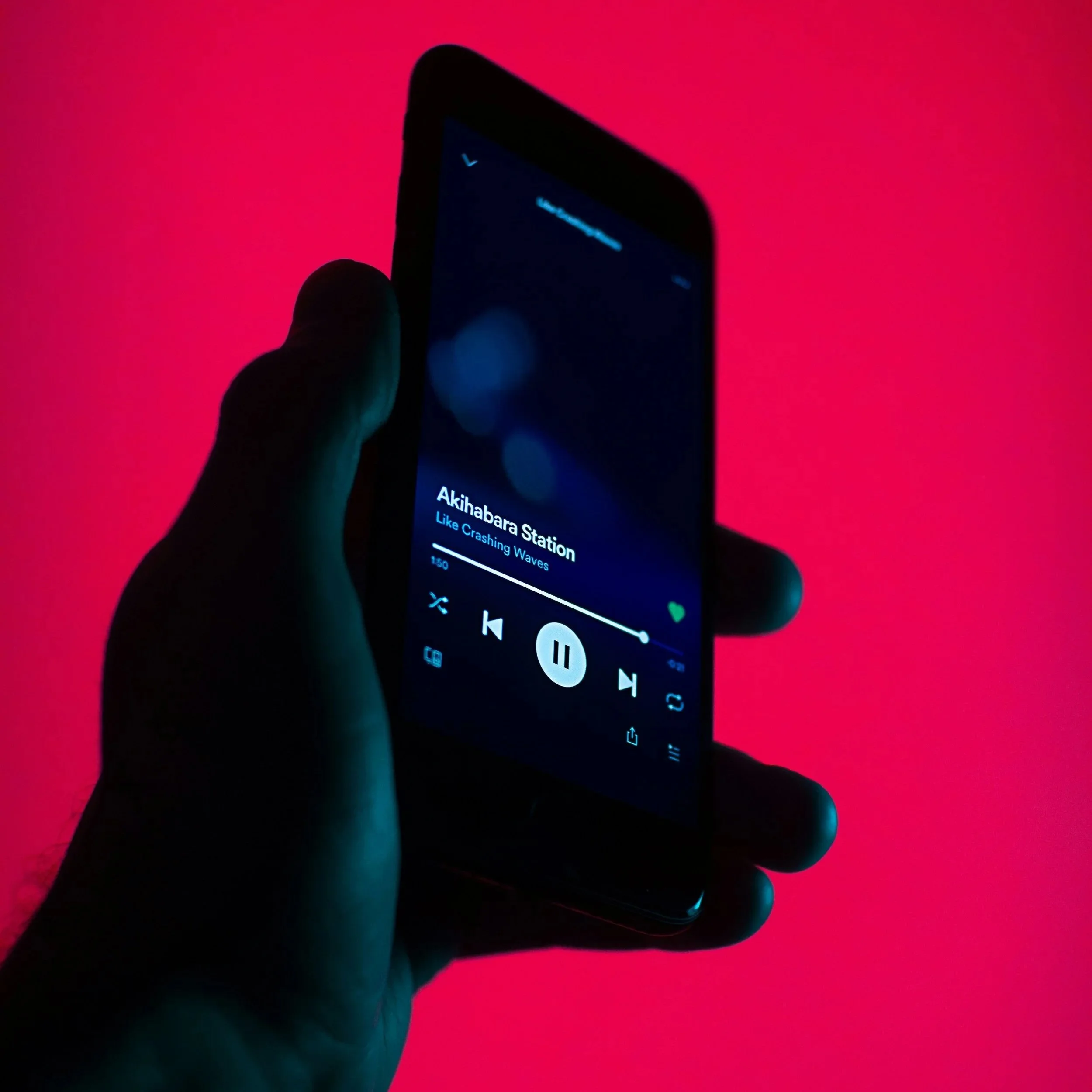
Credit: Felirbe / Unsplash
Songs that once took several minutes to develop can now reach their chorus within seconds, with some tracks barely passing the two-minute mark. For artists competing for attention across Spotify, TikTok and Instagram Reels, the appeal is clear: a shorter song can offer a quicker payoff and encourage listeners to play it again.
But the trend raises a wider question about the influence of technology on music, and whether streaming platforms are shaping the incentives behind songwriting itself.
The economics of a stream
Rather than relying primarily on physical sales, artists and their rights holders receive royalties when their recordings are played on digital services.
The system has created new opportunities for musicians to reach new audiences around the globe. But it has also introduced a commercial inducement, through the system ‘streamshare’, that can influence how songs are structured, thus, the value of a track is increasingly associated with how often it is played.
A shorter track may be completed more quickly, allowing a listener to move on to another song or return to the same one within a shorter period.
The difference can become particularly important when listeners repeatedly play a favourite track. A four-minute song takes twice as long to complete as a two-minute song, meaning the shorter track can accumulate plays more quickly.
However, it's important to note that shorter songs don’t automatically generate more money. A track still needs to attract listeners, retain their interest and encourage repeat play, indicating that the platform's audience is the number one priority in order to gain streams.
The question is no longer simply how long a song needs to tell its story, but how efficiently it can capture a listener and persuade them to stay.
The pressure to capture attention
Streaming platforms have also changed the importance of a song's opening seconds.
Listeners can skip a track almost immediately and move through enormous catalogues of music without committing to an entire album. For artists, this makes the introduction a particularly important part of the listening experience.
Today, some artists favour a more immediate approach, introducing a vocal line, recognisable melody or chorus before the listener has time to lose interest.
On platforms such as Spotify and Apple Music, a play needs to reach 30 seconds to count as a stream. If a listener skips a song before that point, the play does not register in the same way for royalty purposes.
But it's not always that simple. A captivating introduction can hold attention for longer than a poorly constructed chorus, while a short track can still struggle to attract repeat listeners. The challenge for artists is therefore not simply to remove unnecessary seconds, but to make every section count.
For some, this means rethinking the traditional structure of a pop song. Instead of building gradually towards a chorus, tracks may begin with the hook itself, allowing the listener to encounter the most immediately recognisable element first.
How TikTok has shaped the industry
A particular lyric, dance sequence or change in rhythm can become popular through videos, introducing a track to listeners who might otherwise never have discovered it.
But these platforms also encourage music to be experienced in fragments. Users may encounter a few seconds of a song repeatedly without listening to the full thing. All that hard work for nothing, if you ask me.
PinkPantheress has become a notable example of an artist working within this compressed approach. Her music often combines brief runtimes with electronic production and direct, understated vocals, demonstrating that a shorter song can retain a distinctive musical identity rather than simply sacrificing substance for speed.
Tate McRae's ‘Just Keep Watching’, which runs for approximately two minutes and 22 seconds, offers another example of contemporary pop built around concentrated energy and prominent hooks. Such tracks illustrate how a compact runtime can suit music intended to make an immediate impression across multiple platforms.
However, it would be too simple to suggest that TikTok alone has caused songs to become shorter. Streaming has already altered the relationship between individual tracks and albums, while pop music has always adapted to the formats through which it reaches listeners.
A different kind of listening culture
Streaming has also made it possible for listeners to explore a wider range of music.
Audiences can move between genres, countries and independent artists with unprecedented ease, while playlists introduce tracks that might previously have struggled to reach a mainstream audience.
Though, the pressure for artists to secure playlist placements and avoid skips has contributed to what is sometimes called "Spotify-core": a broad category of mellow, mid-tempo and understated music designed to sit comfortably within playlists for studying, relaxing or working.
Shorter songs' growing presence does not necessarily mean that audiences have lost the patience for longer music. Instead, it suggests that artists are navigating an environment in which attention is fragmented, discovery is increasingly algorithmic and commercial success can depend on repeated engagement.
As streaming platforms continue to influence how music is discovered and monetised, song length becomes a reflection of the systems through which music reaches its audience, and the growing demand to create a perfect song while still capturing audience attention within the first few seconds.