Why nostalgia is music's most powerful marketing tool
Written by Mia Samson
In an industry that relies and prides itself on being driven by attention, nostalgia has become one of music’s most powerful marketing tools.
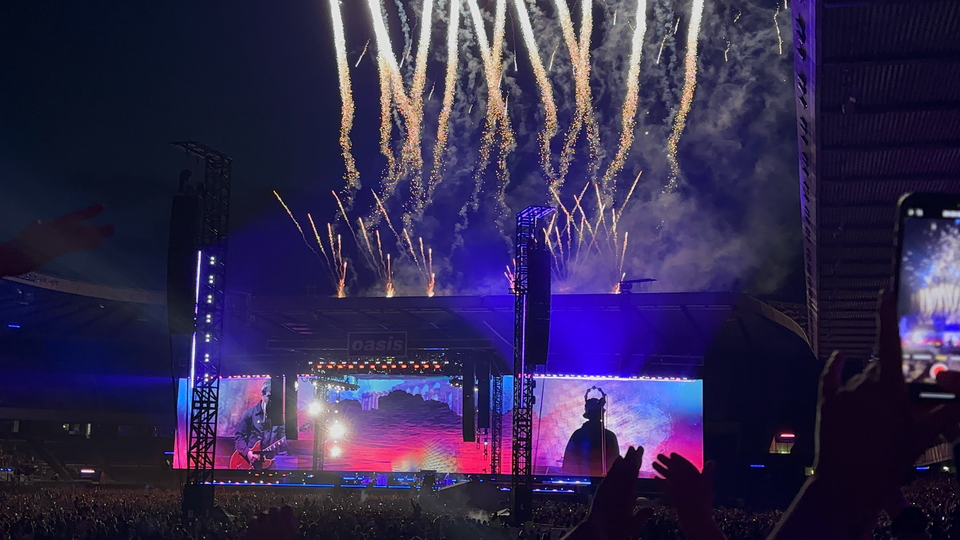
Oasis closing out their set at Murrayfield Stadium, Edinburgh | Credit: Chloe Buckley
By tapping into individual memories through universally loved music, identity and generational belonging, artists alongside music promoters can sell not just music as a product but the feeling of returning to one’s youth and a special, fleeting moment in time.
The success of reunion tours (I think we all know which one), anniversary albums and revived aesthetics shows that fans aren’t buying tickets they're buying their youth back.
Music is a universal entity but it is uniquely tied to individual memory. Unlike other forms of media, a song can transport listeners instantly to a specific moment in their lives whether that be a night out, a relationship, a summer or a death. Because of this, nostalgia marketing works incredibly well with music.
This is also why reunion tours, anniversaries and re-releases outsell new commercial music every single time.
In recent history, we have seen the reformation of one of the biggest bands. That is of course the Oasis 2025 reunion. For fans that grew up in the 1990s, this reunion was not about seeing ‘Wonderwall’ being played live, this was the soundtrack to their youth. Fans who were teenagers during the Britpop scene found themselves in the same stadiums singing the same songs and wearing the same parkas.
The example of Oasis sits inside a much bigger industry money maker - the reunion economy. Blur returned in 2023 for sellout shows in Wembley Stadium, My Chemical Romance in 2019 and one of the most ambitious ventures yet - ABBA Voyage which came decades after the bands split.
These events generate massive amounts of revenue and high demands. Fans aren't just attending concerts, they're reconnecting and remembering a version of themselves that existed before.
Nostalgia within the music industry is used in my opinion to market aesthetics.
Music cycles constantly revive past decades: 80s-inspired synth pop in modern pop production, 90s indie and Britpop aesthetics returning in fashion and guitar music and Y2K pop culture dominating TikTok and youth style.
Along with this, artists emerging now since the resurgence of nostalgia marketing tend to frame themselves within past decades or artists to gain popularity. It provides a recognisable identity that ensures people to like them as reminders of their glory days.
In an overly saturated digital landscape, nostalgia — and the marketing of it — provides us with something familiar to latch onto. Ironically, however, digital streaming platforms have made nostalgia and nostalgic music more powerful.
Streaming platforms such as Spotify or Apple Music puts music from decades previous on the same level as a song from now. Playlists can consist of music from any decade, era or genre. This collapses time and makes older music constantly discoverable for new audiences.
For young people, nostalgia becomes retro discovery and something to base your personality off of for a few months rather than a personal memory for the people that were there at the time of release.
Scenes like the Britpop revival among Gen-Z or renewed interest in 2000s emo show that nostalgia doesn’t always belong to the people who originally lived through the era.
Sometimes it belongs to those who wish they had.
There is a double edged sword of nostalgia, and while it is a powerful marketing force it can be incredibly limiting.
The reliance on the past risks recycling old sounds instead of encouraging innovation in music which I can't help but think is incredibly prominent.
There are some great bands on the scene but there's nothing new within them in their sound or their look. This subsequently turns music scenes into revived cycles - the same can be said about fashion.
Finally due to all of these factors, there is an emphasis by music media outlets to prioritise legacy acts and leaves no room for emerging talent who then try to sound like these legacy acts in hopes of being noticed — thus a vicious circle.
Throughout all of this, the industry continues to lean on nostalgia because it’s predictable, emotional and profitable.
Nostalgia works because music is more than entertainment — it’s memory.
And in a world that moves faster every year, the chance to step back into the past — even for the length of a song — might be the most powerful product the music industry can sell.